Flat roofs have become a preferred roofing solution in Latvia for residential, commercial, and industrial buildings due to their clean design, energy efficiency, and cost-effectiveness. When properly installed, a flat roof offers excellent durability, weather resistance, and high-quality insulation, making it well-suited to Latvia’s climate.
The installation of a professional flat roof needs profound technical knowledge, the right selection of the materials, and the established system of installing. Firms that provide roofing on flat roofing systems are combining new technology with proven materials to provide their clients with results that will take decades. Reliable suppliers like those who are discovered in a roofing materials shop like flat roof installation solutions demonstrate how precision and material quality define successful roofing projects.
In this guide, the complete process of the installation, the best practices, the materials employed and the key cost considerations amongst other things are explained so that the property owners and developers can make informed decisions whilst ensuring a comfortable and exclusive business service throughout the process.
Why Flat Roofs Are Popular in Latvia
Flat roofs are becoming very popular in the construction industry of Latvia in both new constructions and remodeling. This demand is motivated by a number of practical reasons:
- Solar panels and HVAC systems will be used effectively.
- Reduced structure complexity than pitched roofs.
- Contemporary architectural image.
- Profoundly compatible with bituminous covering.
- Regular price structures of roof insulation.
Flat roofs are particularly effective when combined with good quality waterproofing and thermal insulation particularly in areas that are subjected to snow and rain, as well as changes in temperature.
Step-by-Step Flat Roof Installation Process
1. Structural Assessment and Planning
All successful installations of a flat roof start with an effective evaluation of the structure of the building in order to guarantee long-term safety and efficiency. Capacity to carry load, drainage design and insulation are also considered, and these are calculated in the planning phase. The main factors to consider are that the roof slope should be designed effectively to facilitate the water run off, the location of the drainage system should be well determined, the thermal performance should be set, and the choice of material should depend on the type of usage the building is to be used. Precise and thorough planning will not only save the future maintenance expenses but will also guarantee complete adherence to the building standards in Latvia.
2. Surface Preparation
The roof surface should also be well prepared before any roofing layers are installed and this has a direct impact on the overall waterproofing performance. Preparation is a process comprising extensive clean up of dust, debris and moisture, repairing cracks or uneven surfaces and ensuring that the base is smooth and completely dry. Bituminous roofing materials can adhere to a properly prepared surface and minimize the chances of leakage and premature deterioration of the membrane.
3. Installation of Vapor Barrier
The vapor barrier is essential in shielding the inner layers of insulation against the accumulation of moisture within them, where it is particularly vital in climatic conditions in Latvia, where condensation may lead to permanent damages. The vapor barrier will ensure the effectiveness of insulation by avoiding the entry of moisture and will reduce the chances of the development of molds and the destruction of the structure, as well as will enhance the comfort of the indoors. This is an essential layer that is used to develop efficient energy-saving and robust flat roofing systems.
4. Roof Insulation Installation
Thermal insulation is a major defining factor of energy performance of a building and directly affects the cost of heating. The general cost of roof insulation varies on the dimensions of insulation, the form of material to be used and the nature of installation. Mineral wool is also common as well as PIR boards and EPS insulation. Professional roof insulation leads to a stable level of indoor temperatures and greatly decreases the energy costs in the long term.
5. Waterproofing with Bituminous Roofing
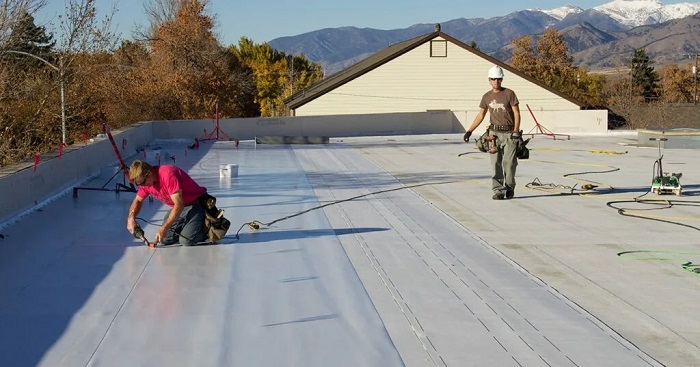
The most crucial step of flat roofing installation is waterproofing and bituminous roofing is the most reliable solution as far as Latvia is concerned because of its durability and flexibility. Bituminous roofing systems are very good in terms of being waterproofing, highly resistant to UV radiation and also long life of service in addition to being less expensive to install. Current membranes are reinforced with bituminous materials which can resist extreme weather as well as mechanical pressure hence guaranteeing long term security of the roof.
6. Installation of Roofing Felt Layers
The roofing felt forms a significant barrier to flat roofing in terms of protection and reinforcement, which enhances the general longevity. Learning about roofing felt pricing can enable the property owner to have realistic budgets without affecting the quality. Roofing felt when correctly laid down, provides a seamless overlap of the membrane and a sure bond and adds to the longevity of the roof to a great extent when waterproofed.
7. Final Sealing and Drainage Testing
The last phase of flat roofing lies on the way of closing all the joints, edges, and roof openings in order to have full waterproofing. The drainage systems are well tested to ensure that there is good flow of water and no ponding. The end quality control involves close visual inspection, water test, and confirmation of edge detailing, which makes the flat roof stand to the professional standards and provide the promised long-term performance.
Best Practices for Flat Roof Installation in Latvia
-
Choose Turnkey Roofing Solutions
- The Turnkey roofing services simplify the whole process, that is, the design procedure to the completion being carried out under a single contract. The method will decrease time wastages, misunderstandings, and unwanted expenses.
Benefits include:
- Single-point responsibility
- Predictable timelines
- Consistent quality control
-
Use Certified Materials Only
Obtaining materials through a reliable roofing materials shop would have durability, compliance, and warranty cover. Certified materials perform better than the generic ones in adverse climates.
-
Hire Experienced Roofing Specialists
Technical accuracy is required in flat roofs. Professional installers can learn the behavior of membranes as well as insulations, and optimization of drainage to provide roofs with a long lifespan.
-
Prioritize Long-Term Value Over Initial Cost
Although initial pricing is important, sustainability of performance determines the real worth. The appropriate insulation, waterproofing, and craftsmanship will save on maintaining costs in the long run.
Cost Factors in Flat Roof Installation
The cost of a roofing project depends on several factors, including the size and complexity of the roof, the type of insulation material chosen, the thickness of the waterproofing layers, and the construction method, as well as labor and installation expenses.
Estimating the cost of roof insulation and roofing felt at an early stage helps prevent unexpected budget surprises and allows for more accurate and clear project planning.
Sustainability and Energy Efficiency
Flat roofs provide an ideal foundation for energy-saving upgrades, making them increasingly popular in urban developments in Latvia. They can accommodate green roofing systems, which help regulate building temperatures, reduce heat absorption, and improve air quality. Flat roofs also support the installation of solar panels, allowing buildings to generate renewable energy and lower electricity costs.
Additionally, reflective waterproof membranes can be applied to minimize heat gain, further reducing energy consumption. Together, these features enhance the overall energy efficiency and sustainability of buildings, contributing to environmentally friendly urban development.
FAQs about Flat Roof Installation in Latvia
1. How long does a flat roof installation take in Latvia?
Most flat roof installations take between one and three weeks, depending on roof size, weather conditions, and material selection.
2. Is bituminous roofing suitable for Latvia’s climate?
Yes. Bituminous roofing performs exceptionally well in cold winters, heavy rain, and temperature variations common in Latvia.
3. What affects roof insulation price the most?
Insulation thickness, material type, and roof area are the primary factors influencing insulation pricing.
4. How often does a flat roof require maintenance?
Professional flat roofs require inspection once per year to ensure drainage efficiency and membrane integrity.
5. What is the lifespan of a professionally installed flat roof?
With proper materials and installation, flat roofs last 25–40 years or more.
Conclusion
The installation of a flat roof in Latvia requires accuracy, professional materials, and professional skills. Starting with insulation planning and finishing with waterproofing, all the steps contribute greatly to the performance in the long term and cost-effectiveness.
By selecting qualified experts and reputable contractors like Roofmaster, the quality of the results will be high, the schedules will be adhered to, and the roofing options will be up-to-date.