



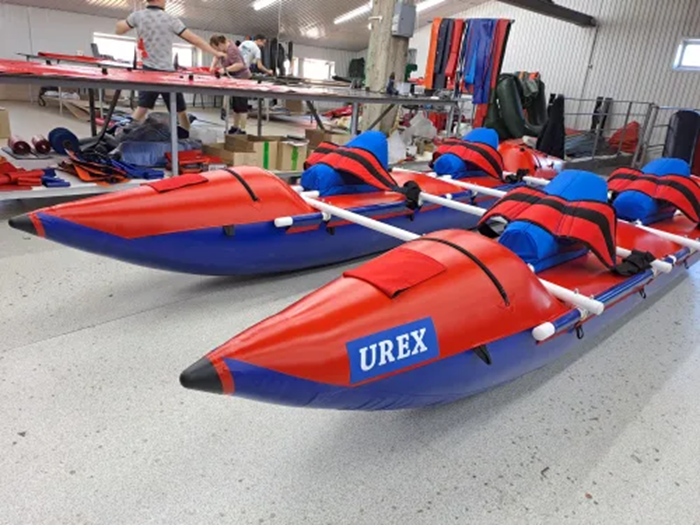
A sailing catamaran is a yacht with two hulls connected by a bridge platform. This design changes the traditional sailing logic: the vessel becomes more stable, more spacious, and often more comfortable for relaxing with friends, especially in warm seas and at anchor.
In practical terms, a catamaran yachtcharteradvisor.com is valued for its combination of comfort and safety: less heeling, more living areas, and good visibility. However, it has its own handling characteristics and anchorage requirements, so it’s important to understand the key differences and usage scenarios before choosing.
How the two hulls are constructed: layout, connecting beams, deck
Two separate hulls (floats) create the key distinguishing feature of a sailing catamaran: a wide base and reduced draft, which reduces heeling and improves course holding in flat water. The load and usable volumes are distributed between the hulls and the central section, which directly impacts speed, comfort, and safety.
Two-Hull Layout
Both hulls act like two long, narrow “rafts”: each creates a portion of the buoyancy and resistance to movement. Hull symmetry is important for predictability in wind and waves; noticeable differences in shape or loading impair balance and control.
- Bow volume (bow buoyancy) affects performance in waves: the greater the reserve, the less risk of “dug-in” during acceleration and in a following wave.
- The center of gravity is determined by the location of the cabins, tanks, batteries, and provisions. Overloading a single hull leads to constant trim and increased resistance.
- Internal distribution: On cruising models, the hulls often carry cabins/bathrooms/technical compartments, while the saloon and galley are in the central superstructure; on performance models, the hulls are as light as possible.
Choosing practice: For touring and life on board, volume and access to compartments in the hulls are more important; for speed, lightweight hulls and minimal “excess” loads are important.
Connecting beams (aka) and the power scheme
Connecting beams connect the hulls into a single frame and bear the main loads: twisting from waves, bending from sails, and impacts during slamming. This is where the issues of rigidity, service life, and sea performance are decided.
- Number and arrangement of beams: typically several transverse beams and longitudinal members; the more properly designed the load-bearing contour, the less deformation of the deck and fastenings.
- Hull attachment points: must be designed for cyclic loads; weak points are cracks and fatigue at stress concentration points.
- Materials and weight: lighter solutions provide dynamics, but require high standards of design and condition monitoring; heavier ones often forgive overloads and hold their geometry more rigidly.
Selection practice: if long voyages and waves are planned, frame rigidity and the quality of the connection points are critical; For sport, the rigidity-to-weight ratio becomes a priority.
Deck and Central Platform
The deck on a catamaran is not only the “floor” between the hulls, but also a working platform that influences aerodynamics, safety, and comfort. The central part can be open (slide/net) or rigid (platform/superstructure).
- Deck Clearance: The greater it is, the less wave impact on the platform bottom and vibrations while underway; Low ground clearance increases the risk of slamming and speed loss in waves.
- Open area (mesh): lighter and “drier” in dynamics, but provides less protection from spray and less usable space.
- Rigid platform: more convenient for living and placing equipment, but is usually heavier and requires proper power integration with the beams.
- Organization of walking areas: walkways along the sides, rails/rails, non-slip areas, and convenient safety attachment points are important for safe sail handling.
Practical selection: for cruising, a protected deck and well-thought-out walkways are preferable; For daytime sailing and speed, a light and open central section.
Bottom Line: Two hulls give a catamaran stability and volume, but efficiency and reliability are determined by how they are connected. When choosing, consider not only the size and windage, but also the load distribution across the hulls, the rigidity of the connecting beams, and the deck clearance/structure—these are the elements that determine real comfort, speed, and wave performance.