



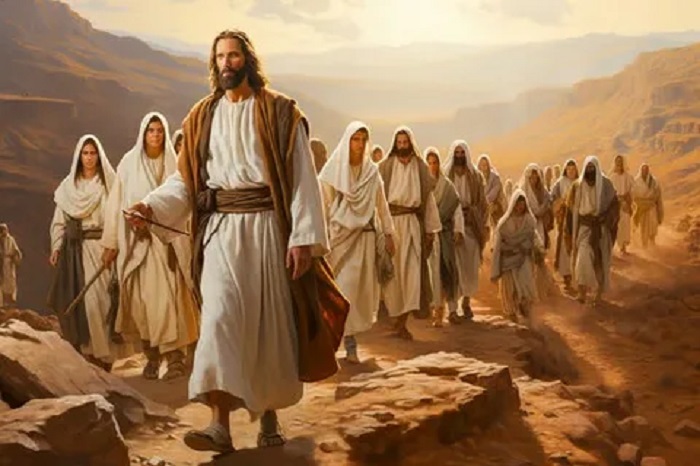
Christianity often gets hollowed out into a list of intellectual approvals. People agree with a creed, sit in a pew, and call it a day. But the New Testament doesn’t recognize a faith that stays still. Following Jesus was never meant to be a static state, it is a pursuit. Scripture defines a disciple not by a capacity to memorize facts, but by a willingness to move. This is a gritty, daily orientation that demands more than a polished Sunday routine. It is about the dirt and reality of a life lived in the wake of a Master.
Apprenticeship Over Information
There is a massive chasm between a convert and a disciple. A convert has changed their mind, but a disciple has changed their master. In the first century, an apprentice didn’t just read a book about a craftsman. They stood by the workbench. They watched the calluses form on the teacher’s hands and mimicked the work’s rhythm. This is the biblical model for followership. It is a spiritual apprenticeship. The goal isn’t just to know what Jesus knew, but to do what Jesus did.
The struggle for many believers is the gap between the “amen” on Sunday and the reality of Monday morning. They have the theology but lack the mechanics to live it out. To bridge this divide, many people find a path forward at The Mentoring Project. It serves as a space where the abstract becomes tangible, helping you move past the initial “yes” of salvation and into the daily “yes” of obedience. If you’re looking for practical ways to navigate this journey, you can learn more at The Mentoring Project website.
The Gravity of the Cross
Scripture doesn’t offer a low-stakes version of the Christian life. The call is to take up a cross. To the original audience, that wasn’t a piece of jewelry; it was an instrument of execution. It meant the end of self-rule. Biblical followership is the process of losing an old life to find a new one. It requires the death of personal ego and the birth of a servant’s heart. This isn’t a specialized calling for “super-Christians.” This is the baseline for anyone who claims the name.
Modern culture obsesses over personal autonomy and “living your truth.” The Bible points in the opposite direction, toward submission to God. That friction is exactly where character is forged. A disciple understands that their time, their bank account, and their local reputation are no longer their own property. They are stewards. This kind of life is rarely sustained in isolation. It requires the heat and pressure of a community where people actually know your name and your struggles.
Faith on the Pavement
The greatest tragedy in ministry is the believer who is “theologically sound” but practically useless in a crisis. Theology has to have legs. It must walk into the kitchen, the boardroom, and the hard conversations. If faith doesn’t change how a person handles a conflict or a paycheck, it isn’t biblical discipleship, it’s just a hobby. Real discipleship is the art of applying eternal truth to the wounds of the present world.
Navigating this path takes more than just good intentions. It takes tools and a plan. Those looking to deepen their walk and move into serious maturity should visit The Mentoring Project website. The focus here isn’t on more information, but on better formation. It is about equipping the believer for the long road.
The Cost and the Reward
A true follower is identified by their fruit, not their vocabulary. The biblical standard is a life marked by sacrifice and a hunger for what is right. This is a transformative path that ends only when the runner crosses the finish line. It is the most difficult and rewarding thing a human can do.
For those tired of a stagnant faith, the next step is waiting. Moving from theory into a vibrant apprenticeship is the core of the Christian calling. Visit The Mentoring Project website to read or listen to free Life Skills guides. These resources help turn the “how-to” of faith into a lived reality.