


Leasing a vehicle for business use comes with a unique set of constraints that outright ownership does not. Among the most overlooked considerations is how you brand those vehicles during the lease term — and what happens when it’s time to hand them back. Whether you’re managing a single leased van or an entire fleet of leased trucks, the choice between vinyl wraps and magnetic signs carries real financial and contractual consequences. Understanding those consequences before you commit to a branding strategy can save your business from unexpected end-of-lease charges and disputes with lessors.
The Lease Agreement Is the Starting Point
Before any discussion of wraps or magnets, the lease agreement itself must be read carefully. Most commercial vehicle leases include clauses about modifications, alterations, and the condition in which the vehicle must be returned. Some leases explicitly prohibit any adhesive application to the paint surface, while others allow it with the caveat that the vehicle must be returned in its original condition. A few progressive lessors have begun accommodating fleet graphics, but they remain the exception rather than the rule.
The key phrase in most lease return clauses is “normal wear and tear.” Scratches from daily use, minor stone chips, and light interior scuffing typically fall within this definition. However, adhesive residue, paint discoloration from prolonged wrap coverage, or damage caused during wrap removal almost universally fall outside it. This is where the stakes become significant — repair costs assessed at lease return can run into thousands of dollars per vehicle.
How Vinyl Wraps Interact with Lease Return Terms
The Case for Wraps: Branding Power and Coverage
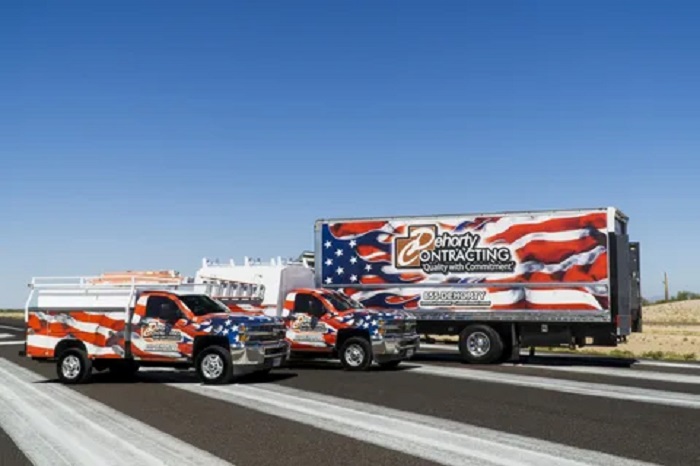
Full or partial vinyl wraps offer unmatched visual impact. A well-executed wrap transforms a plain white van into a rolling billboard, delivering brand impressions across every mile driven. For businesses that depend on local visibility — contractors, delivery services, mobile healthcare providers — the marketing return on a quality wrap is difficult to argue against. Wraps also provide a layer of paint protection during the lease term, shielding the original finish from minor abrasions.
The Risk: Removal Damage and Adhesive Residue
The problem arises at the end of the lease. Vinyl wraps, particularly those applied to vehicles with factory paint that has not fully cured, can cause paint lifting upon removal. Even professionally installed wraps on properly cured paint carry some risk if they are left on for extended periods — typically beyond three to five years — or if the vehicle is exposed to extreme heat cycles. Adhesive residue, if not meticulously cleaned, leaves a haze on the paint that lessors will flag during inspection. Businesses must budget for professional wrap removal as a line item in their fleet operating costs, not an afterthought.
Magnetic Signs: Flexibility with Its Own Limitations
Magnetic vehicle signs have long been the go-to solution for businesses that need branding flexibility — the ability to remove signage after hours, on weekends, or when a vehicle is used for personal purposes. For leased vehicles, magnets appear to be the obvious safe choice because they involve no adhesive contact with the paint surface. In theory, they leave no trace. In practice, however, magnets introduce their own set of risks that fleet managers often underestimate.
Dirt and grit trapped between a magnet and the vehicle surface act like sandpaper every time the vehicle moves. Over months of use, this can produce fine scratches and swirl marks in the paint that, while subtle, are visible under inspection lighting. Additionally, magnets left in place for extended periods — particularly in hot climates — can cause paint discoloration or leave a faint outline where the magnet blocked UV exposure. Lessors conducting thorough return inspections will notice these patterns.
Comparing the Two Options Through a Fleet Lens
When it comes to comparing fleet graphics and magnets, the decision is rarely as simple as “wraps are better” or “magnets are safer.” The right choice depends on lease duration, the number of vehicles, the intensity of branding required, and the specific return-condition language in your lease agreement. A short-term lease of twelve to twenty-four months may favor magnets for their zero-adhesive profile, while a longer lease of three to four years may justify a professionally installed wrap that will be removed well before return. Fleet managers should also consider the cumulative cost: magnets require replacement as they fade or warp, while a single quality wrap installation can last the full lease term with proper care.
Design Trends Influencing Fleet Branding Decisions
The aesthetics of fleet branding have evolved considerably. Businesses are no longer satisfied with a simple logo on a door panel — they want cohesive, design-forward liveries that reflect brand identity across every vehicle in the fleet. This shift mirrors broader trends in commercial interior and exterior design, where brand environments are treated as holistic experiences. Much like the way Parisian interior boutiques are shaping the future of design by blending function with visual storytelling, fleet branding is increasingly seen as an extension of a company’s overall brand environment — not merely a practical identification tool.
Transparency in Lease Terms: What Businesses Should Demand
One of the persistent challenges in commercial vehicle leasing is the lack of standardized, transparent return-condition criteria. Lessors vary widely in how they define acceptable paint condition, what they charge for remediation, and how much discretion inspectors exercise. This opacity is not unlike the pricing transparency issues seen in other industries. Research into hospital price transparency requirements has shown that mandated disclosure often benefits industry insiders more than end consumers — a dynamic that fleet operators should be aware of when negotiating lease terms. Demanding written, itemized return-condition standards before signing a lease is not unreasonable; it is prudent business practice.
About Craftsmen Industries
Craftsmen Industries is a recognized leader in custom vehicle graphics, fleet wraps, and specialty vehicle fabrication. With decades of experience serving commercial fleets across a wide range of industries, the company brings both technical expertise and creative capability to every project. Their team understands the operational realities that fleet managers face — including the constraints of leased vehicles — and works to deliver branding solutions that maximize visual impact while respecting the practical boundaries of each client’s situation. From concept through installation and removal planning, Craftsmen Industries provides end-to-end support that helps businesses protect their investment and their lease agreements simultaneously.
Conclusion: Make the Decision Before You Sign
The most costly mistake a fleet manager can make is choosing a vehicle branding strategy after the lease is already signed and the vehicles are already in service. The time to evaluate wraps versus magnets — and to negotiate return-condition language with the lessor — is before any commitment is made. Document the vehicle’s condition at lease inception with photographs. Understand exactly what your lessor considers acceptable at return. And work with a qualified fleet graphics provider who can advise on installation methods, materials, and removal timelines that align with your specific lease terms. Branding your leased fleet is entirely achievable; it simply requires planning, transparency, and the right partner from the outset.